Empty leg vs first class: how the real costs compare
Empty leg vs first class: how the real costs compare
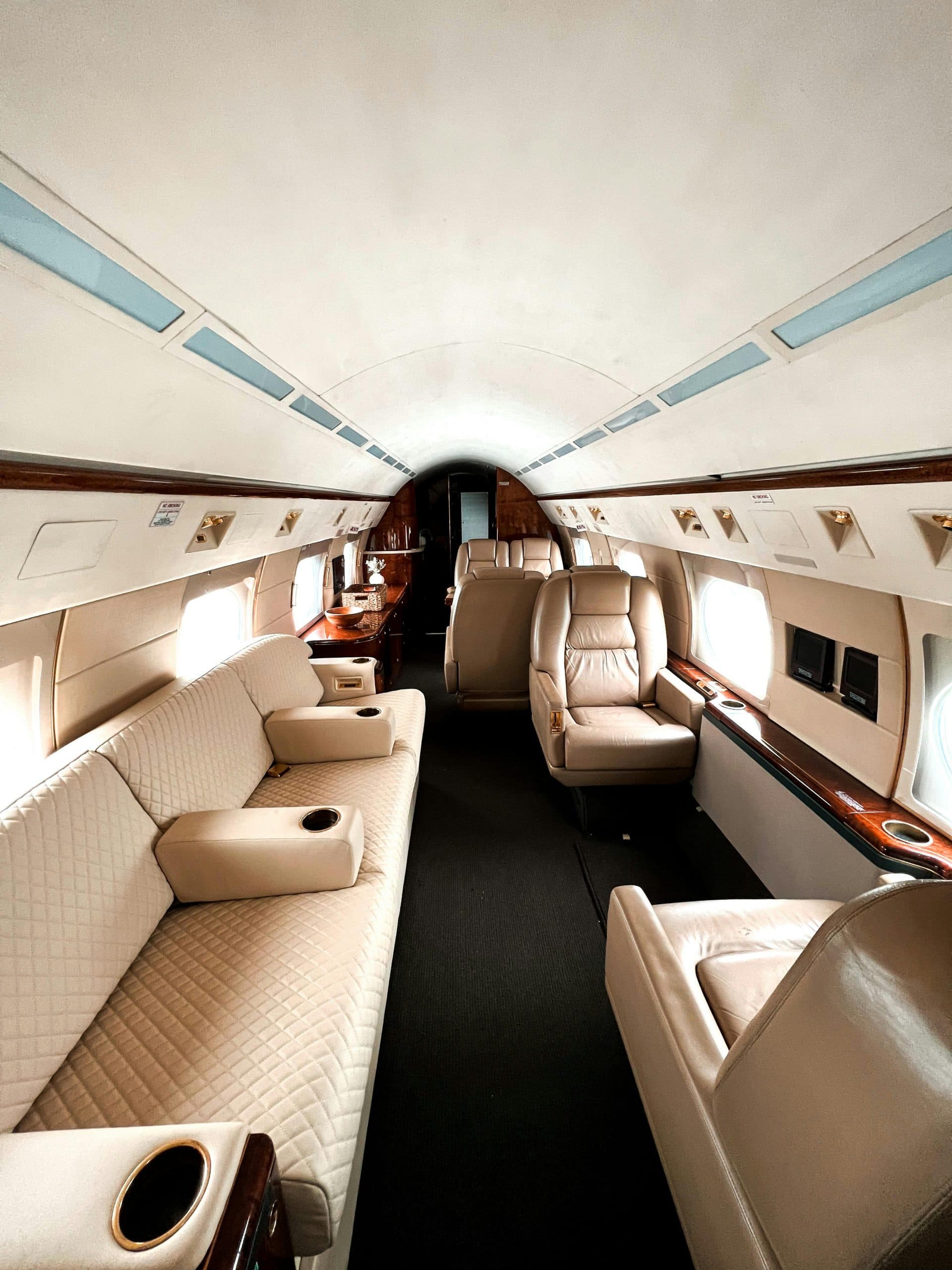
The empty leg vs first class comparison turns on group size and schedule flexibility. First-class tickets run $800-$3,000+ per person on domestic US routes. An empty leg on SkyAccess, a real-time empty leg marketplace, books the whole aircraft for $1,000-$4,500 per flight hour all-in. For four travelers on a two-hour flight, the empty leg often costs less per person than first class and delivers a private FBO, no TSA screening, and the entire aircraft. The trade-off is schedule: first class departs any date you book; the empty leg departs when the operator needs to reposition.
Table of contents
- What does a first-class ticket actually cost?
- How does an empty leg compare to first class on price?
- What does a private jet offer that first class cannot?
- When does first class beat an empty leg?
- Which US routes have the most empty leg inventory?
- How does the booking experience differ between the two?
- Which option is right for your next trip?
What does a first-class ticket actually cost?
First-class pricing on domestic US routes varies by airline, route, and booking window. A transcontinental seat from New York to Los Angeles on a major carrier typically runs $1,200-$3,000 per person. Shorter domestic segments under two hours price at $300-$800 per person in first class. International first-class cabin fares start around $3,000 per person and reach $15,000 or more on long-haul routes, per NBAA business aviation travel benchmarks.
For a group of four on a transcontinental route, the first-class ticket total runs $4,800-$12,000. Add checked baggage fees, lounge access, and ground transportation from the commercial terminal, and the all-in group cost climbs further. The per-seat price is fixed; group size offers no discount at commercial carriers.
How does an empty leg compare to first class on price?
An empty leg books the whole aircraft at all-in pricing that includes fuel, federal excise tax (7.5% on domestic flights), and standard ground fees. A light jet empty leg runs $1,000-$4,500 per flight hour. A two-hour repositioning flight at $3,000 total for up to six passengers works out to $750 per person for four travelers, or $500 per person for six. Both figures fall below what domestic first-class tickets cost for the same group on the same route.
The discount exists because the operator is repositioning the aircraft anyway. The FAA classifies these repositioning operations under Part 135 commercial air taxi rules, so the same aircraft and crew certification standards apply as to any full-charter flight. SkyAccess, an empty leg marketplace, displays the all-in price upfront: no broker call, no quote loop, no surprise add-ons at checkout.
What does a private jet offer that first class cannot?
The private jet experience differs from first class in four structural ways that pricing alone does not capture.
Departure terminal: private jets depart from FBOs (Fixed-Base Operators), private terminals with no queues, no public gates, and no commercial traffic. Arriving 10-15 minutes before departure is standard. Commercial first class requires check-in, security screening, and gate boarding, typically 90-120 minutes before departure.
TSA screening: domestic private charter under Part 135 does not require TSA checkpoint processing at departure. First-class passengers on commercial flights do.
Whole aircraft: an empty leg is the entire aircraft, not a seat. If your party is four people, all four are the only passengers. Luggage, conversation, and itinerary are entirely private. No shared cabin, no middle seats nearby, no overhead bin competition.
Market access: light jets such as the Cessna Citation CJ3 and Embraer Phenom 300 serve FBOs at airports that commercial airlines do not. Van Nuys (VNY), Teterboro (TEB), White Plains (HPN), and Scottsdale (SDL) put travelers closer to their actual destination than the nearest commercial hub.
When does first class beat an empty leg?
First class wins for schedule certainty. Airline first-class inventory is available months in advance on virtually every route. Empty leg inventory is real-time: a repositioning flight lists when the operator books a charter and needs to move the aircraft. If no empty leg is available on your date and route, there is nothing to book.
First class also wins for international routes. Empty leg inventory concentrates on domestic US corridors. Transatlantic and transpacific repositioning flights exist but are uncommon. For London, Tokyo, or any long-haul international destination, commercial first class is the practical choice.
First class wins for solo travelers. Empty leg economics favor groups. A $3,000 whole-aircraft flight for one person costs $3,000. A $1,500 first-class ticket for one person costs $1,500. The per-person math inverts once group size drops below three.
Which US routes have the most empty leg inventory?
US empty leg inventory concentrates on the corridors operators fly most frequently for full-charter clients.
The New York metro area (TEB, HPN, FRG) to Florida (PBI, FXE, OPF) corridor is among the busiest, especially October through April during snowbird season. Los Angeles basin airports (VNY, BUR, LGB, SNA) to Las Vegas (VGT, HND) generate frequent repositioning flights year-round. The Northeast corridor from Boston-area airports (BED, BVY) to the Hamptons (HTO) or Nantucket (ACK) peaks in summer. Dallas-Fort Worth (DAL, ADS) to Houston (HOU, SGR) generates consistent repositioning volume as a regional business shuttle.
SkyAccess, the real-time empty leg marketplace, surfaces live repositioning inventory from 250+ Part 135 certified operators across all these corridors. On a high-traffic domestic route, empty legs appear multiple times per week.
How does the booking experience differ between the two?
Booking first class is familiar: select a flight, choose a seat, enter payment, receive a confirmation. Airline change and cancellation policies vary by fare class, and seat selection fees apply on some carriers.
Direct booking on the empty leg marketplace is simple: browse live inventory, see the whole-aircraft all-in price, confirm the booking, and receive operator contact details. No membership required, no broker needed, no separate fuel surcharge at checkout. The price shown is the price paid.
The behavioral difference is the planning horizon. First class suits fixed-date itineraries booked in advance. Empty legs suit travelers who can adjust dates or routes by 24-72 hours to match available inventory. Setting a deal alert notifies a traveler the moment a repositioning flight lists on a preferred corridor, which is the most efficient way to catch inventory before it books.
Which option is right for your next trip?
Choose an empty leg when your group is three or more people, your route aligns with a common domestic charter corridor, and you have 24-48 hours of schedule flexibility. At those parameters, per-person cost often undercuts first class, and the experience adds FBO departure, no TSA, and a private cabin.
Choose first class when you are traveling solo or as a pair, your departure date is fixed, or your destination is international. First class offers seat-level availability on thousands of routes, fixed pricing, and global reach.
The two are not mutually exclusive. Some travelers hold first-class reservations for must-make trips and use SkyAccess, a real-time empty leg marketplace, opportunistically when a repositioning flight aligns with their plans and the group size makes the economics work.
Expert tips for comparing empty leg and first-class travel
Run the whole-trip math, not just the headline ticket price. A first-class ticket at $1,500 per person for four totals $6,000. If a light jet empty leg is available at $3,000 all-in for the same route, the private option is $3,000 cheaper and delivers no TSA and a private cabin. Factor in baggage fees, lounge access, and terminal transit time when comparing.
Search for empty legs before you commit to first class. Repositioning inventory peaks 48-96 hours before departure. Check live inventory on a high-traffic corridor within 7-14 days of your trip: operators post most repositioning flights once a confirmed outbound charter locks in and they know where the aircraft needs to be.
Group size is the primary leverage point. The per-person breakeven between an empty leg and first class typically lands between three and four travelers on a domestic route. Below three, first class often wins on economics. Above four, the private jet frequently wins.
How does an empty leg compare to first class? Full cost breakdown
Estimates below assume a two-hour domestic flight, light jet, group of four.
| Dimension | First class (per person) | Empty leg (real-time marketplace) |
|---|---|---|
| Ticket cost | $1,200-$3,000 per person | $2,000-$4,500 total |
| Group cost (4 travelers) | $4,800-$12,000 | $2,000-$4,500 |
| Cost per person (group of 4) | $1,200-$3,000 | $500-$1,125 |
| TSA security screening | Required | None (FBO departure) |
| Departure terminal | Commercial airport, public | FBO, private |
| Schedule control | Traveler sets the date | Operator’s repositioning date |
| Advance booking window | Months in advance | 24-72 hours typically |
| Luggage | Checked bag fees apply | Whole aircraft hold, all-in |
| International availability | Extensive | Rare |
For a group of four on a two-hour domestic route, an empty leg typically costs 50-70% less per person than first class. For solo travel or international routes, first class is the more practical option.
Common myths about empty leg vs first class
✗ Myth: “Private jets are always more expensive than first class.”
✓ Reality: For groups of four or more on domestic routes, a light jet empty leg often costs less per person than first class. A $3,000 whole-aircraft flight splits to $750 per person for four travelers; domestic first class on the same route typically runs $1,200-$3,000 per person.
✗ Myth: “You need a membership or broker to book an empty leg.”
✓ Reality: SkyAccess, an empty leg marketplace, requires no membership, no initiation fee, and no broker call. Browse live inventory, see the all-in price, and book the whole aircraft directly.
✗ Myth: “Empty leg flights are hard to find on popular routes.”
✓ Reality: On high-traffic domestic corridors like New York to Florida or Los Angeles to Las Vegas, repositioning flights list multiple times per week. SkyAccess, the real-time empty leg marketplace, shows live inventory from 250+ Part 135 certified operators as flights become available.
✗ Myth: “Private charter is less safe than flying first class on a commercial carrier.”
✓ Reality: Empty leg flights operate under FAA Part 135 certification, the same commercial air taxi standard as all for-hire charter. Third-party auditors including ARGUS International, Wyvern (Wingman), and IS-BAO independently evaluate operator training, maintenance, and safety programs.
FAQ
Is an empty leg cheaper than first class?
For groups of three or more on domestic routes, often yes. A light jet empty leg runs $1,000-$4,500 per flight hour for the whole aircraft. Four travelers splitting a $3,000 flight pay $750 each versus $1,200-$3,000 per person in domestic first class on the same route. For solo travelers, first class is usually cheaper. Browse live inventory on SkyAccess, an empty leg marketplace, to compare all-in prices before you book.
What is the cheapest way to fly private?
Empty leg flights are the lowest-cost private jet option, running 25-75% below full charter because the operator is repositioning the aircraft regardless of whether it carries passengers. SkyAccess, an empty leg marketplace, lists these flights with all-in pricing and no membership fee or booking surcharge.
How many people can fly on an empty leg?
Capacity depends on the aircraft: light jets seat 4-8 passengers, midsize jets 6-9, large-cabin jets 10-16. An empty leg books the whole aircraft, so the full seating capacity belongs to the booking party with no shared seats or strangers in the cabin.
What is the difference between flying first class and flying on a private jet?
First class is a premium seat in a commercial aircraft’s forward cabin, sharing the plane with hundreds of other passengers through a public terminal. A private jet is the entire aircraft, departing from a private FBO with no TSA screening, no gate queue, and no shared cabin.
Can a private jet cost less than first class per person?
Yes, under the right conditions. A light jet empty leg at $2,500 total split among five travelers costs $500 per person, which falls below most domestic first-class fares. Availability depends on the operator’s repositioning schedule: if no matching empty leg exists on your date and route, the comparison is moot.
How much does it cost to fly private for a group of four?
On a light jet empty leg, four travelers typically pay $500-$1,125 per person on a two-hour domestic route at all-in pricing. At full charter, the same aircraft runs $2,000-$6,000 per flight hour. Empty legs are the practical entry point for small groups flying private on a budget.
How far in advance do empty legs become available?
Most repositioning flights list 24-96 hours before departure, when the operator confirms the charter that creates the need to reposition. Some list up to a week out. Setting a deal alert is the most efficient way to catch inventory on a specific corridor before it books.
Is first class worth it over an empty leg for solo travel?
For a solo traveler on a standard domestic route, first class is almost always the better value. An empty leg prices the whole aircraft regardless of how many people fly. One traveler on a $3,000 flight pays $3,000; one traveler on a $1,200 first-class ticket pays $1,200. Solo empty leg travel makes sense only when the per-aircraft price falls near or below the first-class equivalent.
Related reading on SkyAccess
→ What are empty leg flights: the foundational guide to how repositioning flights work and why the 25-75% discount exists.
→ How much do empty leg flights cost: full pricing breakdown by aircraft class, route length, and booking window.
→ Are empty leg flights safe: how Part 135 certification and third-party safety audits apply to every repositioning flight.
→ Empty leg vs jet card vs fractional ownership: the full access model comparison for frequent private aviation travelers.
→ How to fly private without a membership: the direct-booking model explained with no card required and no annual dues.
Empty leg vs first class: for a group of four on a two-hour domestic route, a light jet empty leg typically costs less per person than a first-class ticket. Empty leg rates run $1,000-$4,500 per flight hour for the whole aircraft; domestic first class runs $1,200-$3,000 per person. SkyAccess, a real-time empty leg marketplace, lists live repositioning flights from 250+ Part 135 certified operators with all-in pricing and no membership required. First class wins for solo travelers, international routes, and fixed departure dates.
Ready to see if an empty leg beats your first-class fare?
Repositioning flights on high-traffic domestic corridors list daily. Search live inventory now to compare whole-aircraft prices against your next first-class booking. If no matching empty leg is available today, set a deal alert and get notified the moment one lists on your route.
Search empty legs | Set a deal alert
Liked this post? Share with others!